Viking Hero TD review: a shieldwall worth holding
Most mobile tower defense games ask you to do one thing: place towers along a path and watch. Viking Hero TD asks for three. You are a village planner, a quartermaster and, once the sun goes down, a mounted warlord charging into the line. The surprise is how well those jobs fit together on a phone screen, and how rarely the game tries to sell you a shortcut while you do them.
The core loop: build by day, fight by night
Every level drops you onto a fresh patch of Norse wilderness with a castle at its heart and a handful of build spots around it. Daytime is calm. You collect resources, raise houses and barracks, and drop watchtowers where the paths converge. When you're ready, you call the night yourself, and the Jotun and their allies roll in from the map edges.
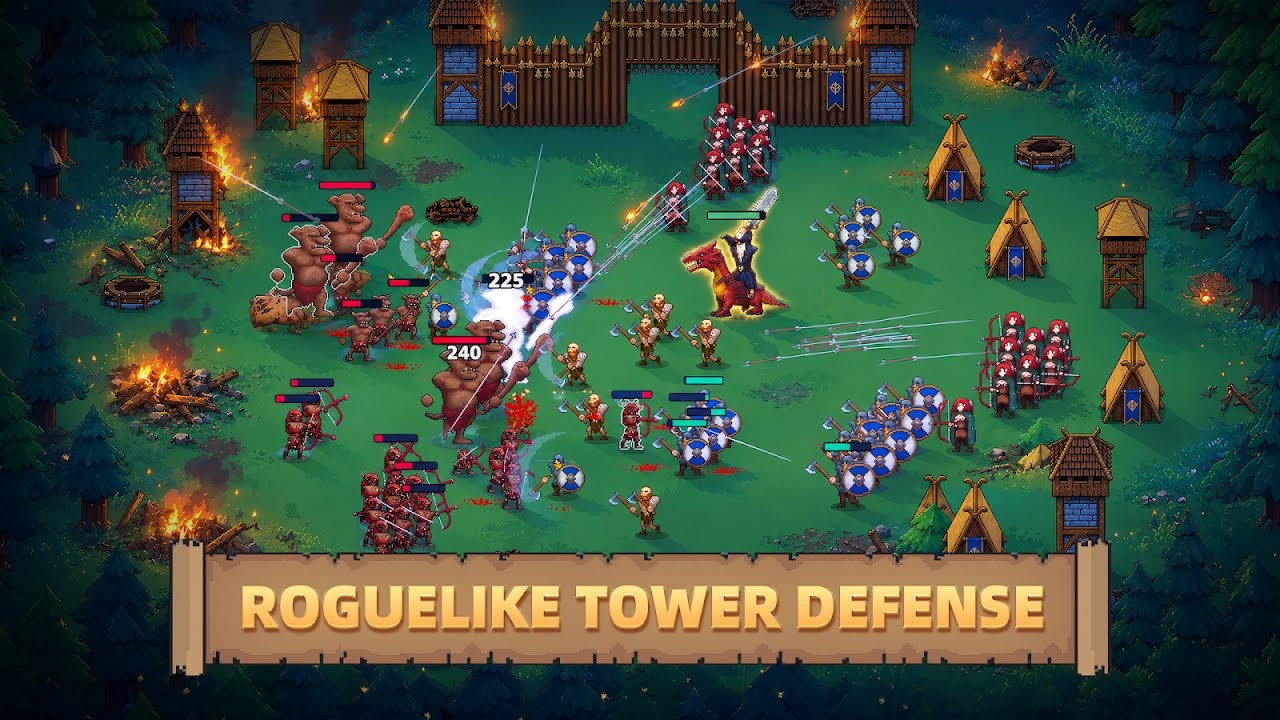
Then the game shifts gear. You take direct control of your hero, steer them across the battlefield and decide where your squads should hold. It is light RTS rather than full micro, but positioning matters: a well-timed charge into an archer pack can save a gate that your towers alone would lose. The rhythm of quiet build, loud fight, quiet build again is the hook, and it lands.
Strategy depth
On paper the toolkit is small. In practice the interesting decisions come from scarcity. Gold you spend on a stone tower is gold you didn't put into another squad, and a village that leans too hard on walls tends to crumble when ranged enemies start picking at it from outside tower range. Later chapters mix in tougher units, and several of our test runs fell apart because we had overbuilt one side of the map.
The roguelike layer is what keeps repeated levels from feeling identical. Between waves you choose from perk cards such as boosting tower health and damage, making houses fire arrows, or rewarding your units with coin for kills. Stack the right ones and a weak layout suddenly becomes a fortress; pick greedily and you'll feel it two waves later. It isn't deep in the way a PC strategy game is, but it gives every run a slightly different shape.
Progression & economy
Outside the levels you unlock new heroes, weapons and gear, and each piece nudges your playstyle. The developer's own advice, given in a reply to a player, is that swapping gear and trying new builds changes a lot, and we agree: a ranged-focused loadout plays very differently from a frontline brawler.
The pace is where opinions split. Early chapters move briskly; by the middle of the campaign upgrades arrive more slowly and some players on Google Play describe a noticeable difficulty jump. We hit that wall too. Replaying earlier levels and experimenting with builds got us through without spending, but impatient players will notice the grind.
Visuals & audio
The pixel art is the clearest sign of care. Towers visibly grow from thatched wooden lookouts into stone-and-timber keeps, troops carry readable silhouettes, and night battles glow with fire arrows and burning tents. Even in a crowded fight we could usually tell our blue shields from the enemy reds. Sound is functional rather than memorable; it does the job of signalling hits and waves without getting in the way.
Monetization & ads
The Play listing is honest about this: the game contains ads and offers in-app purchases. What matters is how they behave. The store description promises no forced ads, and in our time with it ads only appeared when we chose to watch one for a bonus. There is also a paid option to skip ads entirely. The developer has said openly that the game gets harder if you never use either, which is a fair trade, but worth knowing before you hit the mid-game. The listing also notes the game is designed for offline play, which makes it a good pick for commutes.
Verdict
Viking Hero TD isn't trying to reinvent strategy. It takes a proven day-and-night defense structure, adds a hero you actually steer, layers perks on top and wraps it in charming pixel art. The mid-game slowdown and some repetition across levels keep it from greatness, but the absence of forced ads, offline play and a developer still shipping new chapters (Chapter 7 added ten more levels) make it easy to recommend. If you like your tower defense with a bit of mud on its boots, raise the shieldwall.
Final score 8.2 / 10