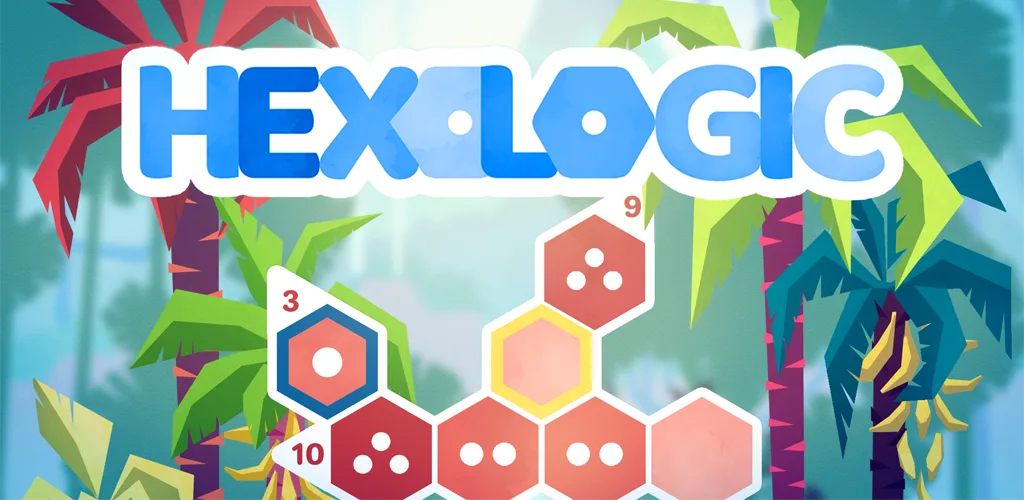

Most number puzzles on a phone feel like homework with a nicer font. Hexologic, from the small Polish studio MythicOwl, is the rare one that feels closer to a quiet hobby. It borrows the bones of Sudoku and Kakuro, lays them out on a honeycomb of hexagons and wraps the whole thing in low-poly jungles and underwater caves. We played through a good chunk of it over a week of commutes and late evenings, and it earned a permanent spot on our home screen.
Gameplay: three directions, one sum
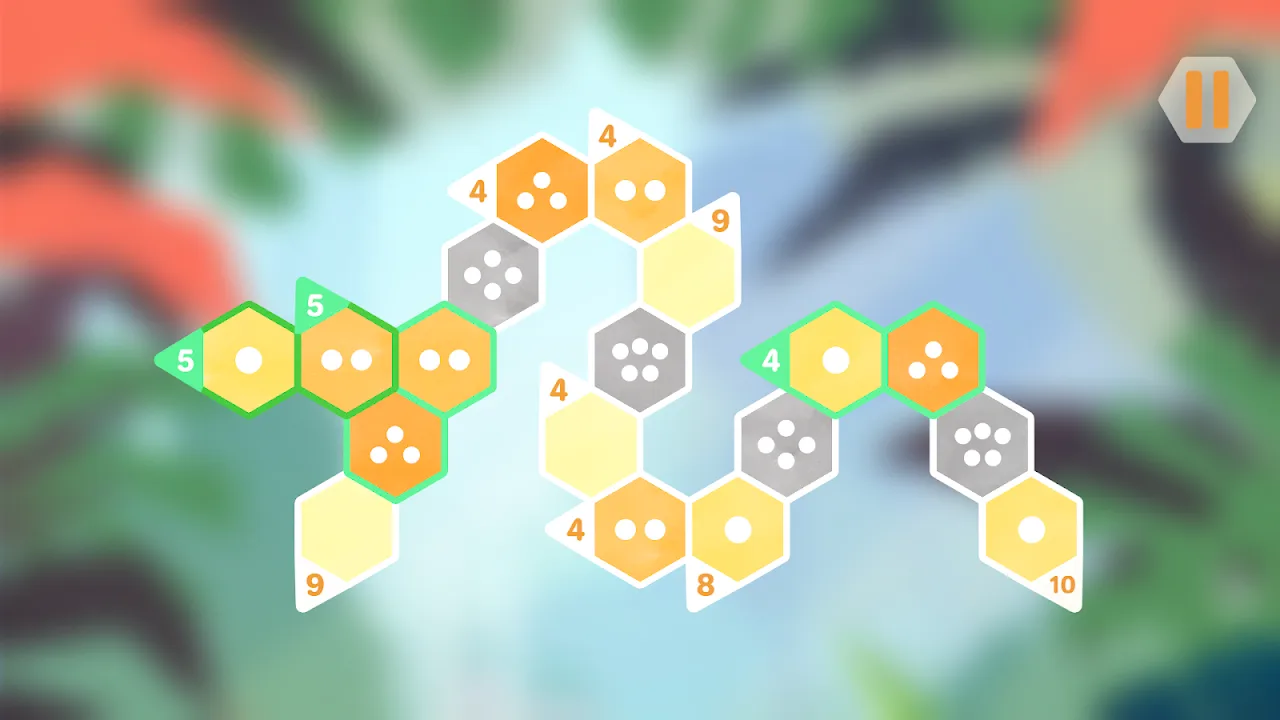
Every level is a small cluster of hexagons. Around the edge of the cluster sit numbers, and each number belongs to a line of cells running in one of three possible directions. Your job is to fill the empty hexes with dots so that every line adds up exactly to the clue at its end. Some cells start out locked with a fixed number of dots, and those are your anchors.
That third direction is what makes it click. On a square grid you think in rows and columns; here every cell sits on up to three lines at once, so a single dot can satisfy one sum and break two others. The first few boards are almost tutorials, but before long you are juggling overlapping constraints and enjoying the little jolt when a whole diagonal snaps into place.
Controls: built for a thumb
Hexologic is a touch-first game and it shows. You tap a hex to set how many dots it holds, and the edge clue changes color once its line is satisfied, so you always know where you stand. There is no timer, no lives counter and no penalty for experimenting. Boards are sized so that a phone held in portrait shows the whole puzzle without pinching or panning, and the cells are large enough that we rarely mis-tapped, even one-handed on a bus.
One small gripe: the game explains very little beyond the basics. A press-and-hold note feature exists on some boards, according to players on the store listing, but we only found it by accident. A one-screen tips page would help newcomers.
Progression & difficulty
The store listing promises six worlds and more than 90 levels, laid out as a winding map with numbered hexagons as stops. New mechanics arrive gradually rather than all at once, and each world nudges the rules just enough to make you rethink habits from the previous one. The difficulty curve is gentle for the first two worlds and noticeably steeper after that, but it never tips into trial-and-error guessing: every solution we found could be reached by pure deduction.
Players on Google Play also mention bonus levels and an endless mode that open up after the main campaign, which goes some way toward answering the obvious question of replay value. Even so, a focused solver can see the core levels in a handful of evenings.
Visuals & sound
The art is the first thing you notice and the last thing you forget. Backgrounds are soft, low-poly scenes: tangled jungle canopies, coral reefs, misty violet valleys. During play they blur out of focus so the board always stays readable, and between levels the map pulls back to show the full illustration. It is a lovely trick that makes progress feel like travel.
The soundtrack leans ambient and unhurried, the kind of music that fades into the background while you think. Effects are soft clicks and chimes rather than fanfares. We played most sessions with headphones on and never once reached for the mute switch.
Monetization & ads
This is where Hexologic stands out from almost everything else in the puzzle charts. It is a paid game: one purchase up front (listed at $2.99 on the US store when we checked; local prices vary) and that is it. The Play listing carries no “Contains ads” or “In-app purchases” labels, and in our time with it we saw no banners, no energy meters and no hint shop. It is also tagged for offline, single-player play, which makes it a good pick for flights.
Verdict
Hexologic does one idea very well. The three-direction twist gives familiar sum puzzles a genuinely fresh feel, the art and music turn a logic exercise into something closer to meditation, and the premium model means nothing ever interrupts you. It is short, and the late difficulty spike may stall casual players, but for anyone who enjoys Sudoku or Kakuro it is an easy recommendation.
Tessellate score: 8.6 / 10. A calm, clever and honest puzzle game that respects your time and your wallet.